From Participation to Shared Power: Putting Meaningful Youth Engagement Into Practice
Reace Novello


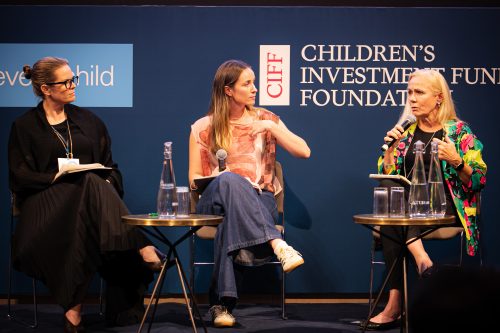
At the World Health Summit 2026 in Berlin, youth leaders, funders, researchers and institutional partners came together to explore how meaningful adolescent and youth engagement can become a practical standard across health governance, financing, programmes and accountability.
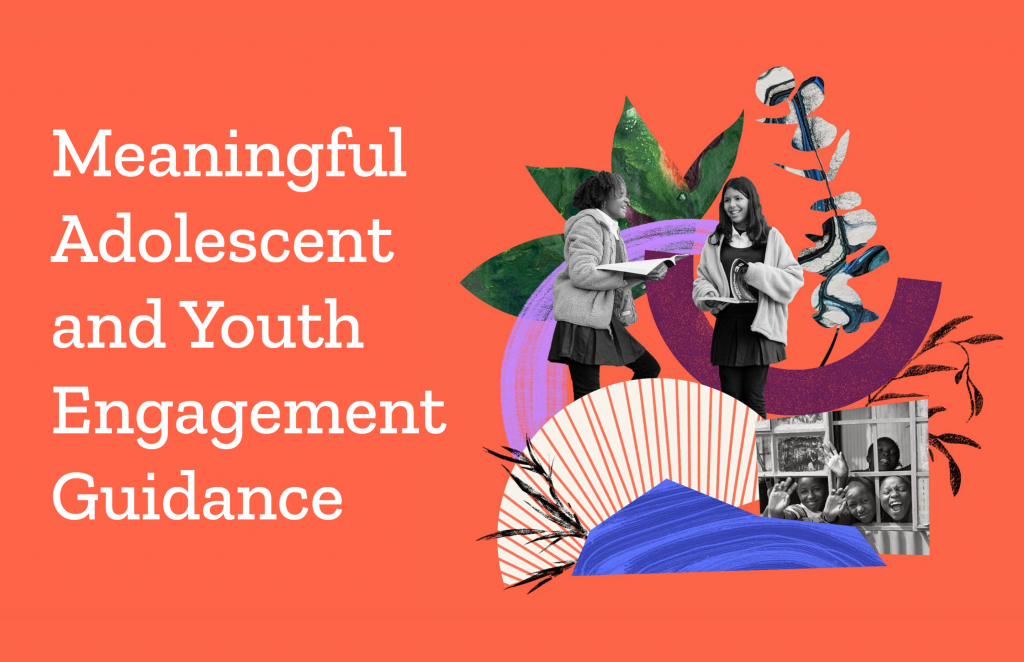
As part of this wider conversation, co-hosted with Fondation Botnar and PMNCH, CIFF launched the new Meaningful Adolescent and Youth Engagement (MAYE) Guidance, a new ecosystem building tool, designed to help institutions move beyond one-off consultation towards sustained influence and shared power. Rajat Khosla, Executive Director of PMNCH, kicked off the launch event with a clear point: “What is not named does not get done.” This led to a deep conversation about defining what actually makes youth engagement meaningful.
Throughout the discussion, one message came through clearly. Having young people in the room is not enough. Meaningful engagement means creating genuine opportunities for them to shape decisions, influence priorities, and hold institutions accountable for the outcomes.
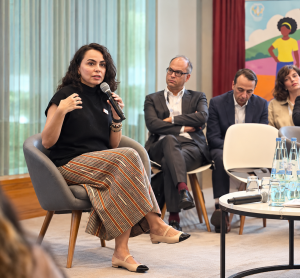 For Maria Antonieta Alcalde Castro, Director General of the International Planned Parenthood Federation, this distinction is rooted in personal experience. She reflected on her own journey as a youth leader, having had the opportunity at just 17 to contribute to the International Conference on Population and Development (ICPD+5), and now being in a leadership role with the ability to extend those same opportunities to the next generation. Being invited into decision-making spaces at a young age enabled Maria Antonieta to shape outcomes, but it also taught her that presence is not the same as power.
Meaningful engagement requires institutions to look at who holds power and who gets to exercise it. The conversation highlighted that meaningful participation can sometimes make institutions uncomfortable, however, that discomfort can itself be an indication that young people have moved beyond simply being present, and are beginning to challenge established ways of working. Other panelists explored what this shift means in practice. Olivia Biermann, from the Lancet Commission on Adolescent Health and Wellbeing, highlighted persistent evidence gaps around youth engagement, and the importance of building a better foundation of research to help understand and demonstrate its impact.
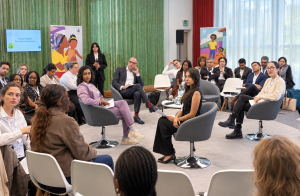 Niall Fry, Team Leader for Global Health Security at the UK Foreign, Commonwealth & Development Office, reflected on the value young people bring to policymaking and the importance of ensuring policies respond to their needs. Yvonne Arivalagan, Policy Manager at Fondation Botnar, brought a funder’s perspective, discussing why investing in youth leadership matters.
The roundtable, moderated by youth leader Shukti Anantha, highlighted that the simple test for whether that engagement has been meaningful is to ask what difference it made. If the impact of the involvement of young people cannot be identified, we need to ask whether enough power was really shared.
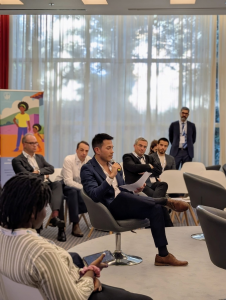 For David Imbago-Jacome, Manager of Ecosystem Development and Equity at CIFF, that is precisely where the challenge lies. There is no shortage of commitments to youth participation. The persistent gap is in going from that participation into actual implementation, which is why the guide focusses on tangible examples such as compensation, safeguarding, inclusion, feedback, and evidence of influence.
This is what the new MAYE Guidance seeks to address. Young people are already leading, organising, and shaping change. The MAYE Guidance provides practical tools to help institutions move from good intentions to meaningful implementation, embedding youth engagement across decision-making, accountability, and programme design.
Our invitation today is simple: use the tool, adapt it to context, and ask a harder question than whether young people were present. Instead, ask what influence did they have, and what changed as a result.