What it really takes to eliminate neglected tropical diseases
Rita Oliveira


Across Africa, neglected tropical diseases (NTDs) are shifting from a seemingly permanent burden to a set of diseases that countries can realistically eliminate. More than 20 countries in the WHO African Region had eliminated at least one NTD by the end of 2025, while 305.6 million people received treatment for at least one preventive-chemotherapy NTD in 2024. These figures attest to extraordinary scale, yet they can also obscure the sustained technical, political and institutional effort behind every elimination milestone.
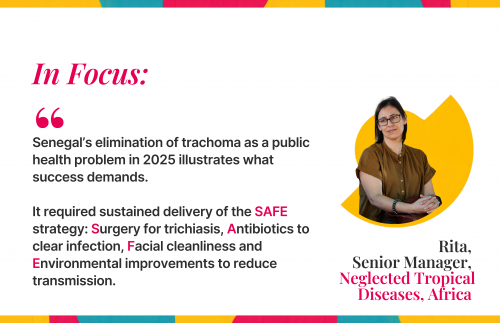
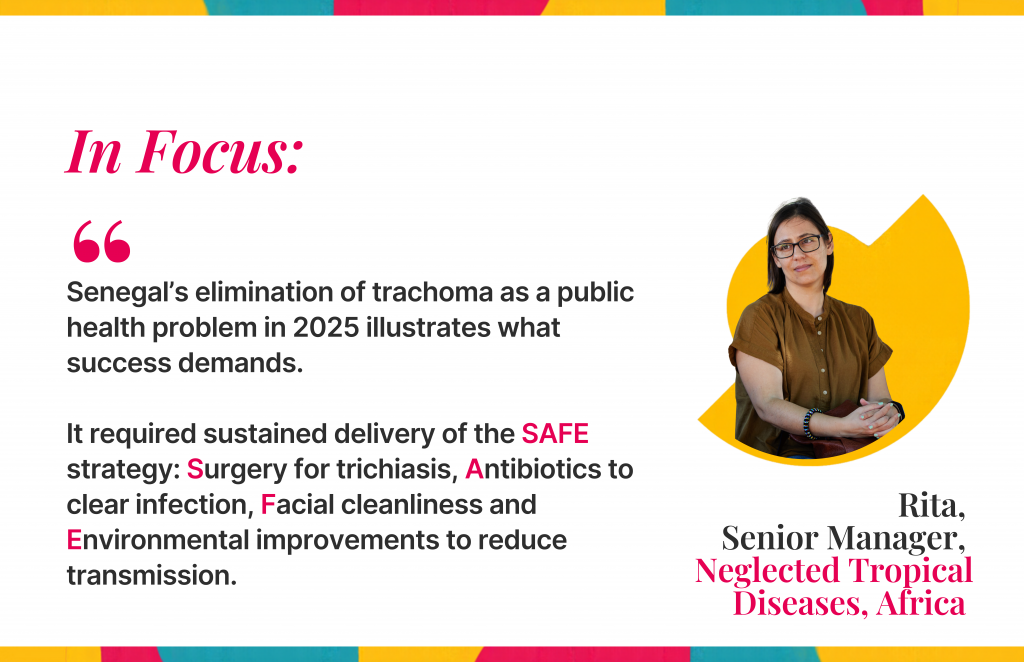
Senegal’s elimination of trachoma as a public health problem in 2025 illustrates what success demands. Led by the Ministry of Health, the national programme spanned 21 years, and received support from partners including the International Trachoma Initiative, RTI International, FHI 360 and, more recently, the Accelerate programme. During this period, approximately 53,616 cases of trachomatous trichiasis were managed surgically, including 8,539 through Accelerate, and now an estimated 17–18 million people no longer require trachoma interventions or face the risks associated with the disease. This was not the result of a single campaign. It required sustained delivery of the SAFE strategy: surgery for trichiasis, antibiotics to clear infection, facial cleanliness and environmental improvements to reduce transmission. It also depended on repeated surveys, reliable data, domestic leadership and the capacity to detect and manage remaining cases after external support declines.
Niger’s elimination of onchocerciasis transmission in 2025 offers a complementary lesson. Following almost 50 years of treatment, surveillance, and vector assessment, Niger became the first African country verified by WHO as having interrupted transmission. The achievement also shows that the gains from elimination extend well beyond disease control. An estimated US$2.8 billion was added to Niger’s economy over 45 years through the elimination of onchocerciasis, as well as the control of lymphatic filariasis. People were able to remain productive, families were released from caregiving burdens, and communities could resettle fertile riverine land previously associated with infection risk.
These examples change how we should understand elimination. It is a technical endpoint, but it is also a long-term investment in health systems, data, community trust, and economic opportunity. Several African countries are now approaching elimination milestones for trachoma, lymphatic filariasis and onchocerciasis. Reaching the finish line – and preventing resurgence – will require sustained national ownership, surveillance and financing. The lesson from Senegal and Niger is clear: elimination is achievable, but only when ambition is matched by persistence.
To learn more about progress on fighting maternal and child malnutrition, read the full 2025 Annual Report: CIFF: Our Year in Review 2025