Why youth participation in climate decision-making matters
Alanya Dhalla


How can funders ensure young people aren’t just inheriting the climate crisis, but actively shaping the policies to fix it? We asked Alanya Dhalla, CIFF’s Climate Manager, to share insights from her work in climate action:
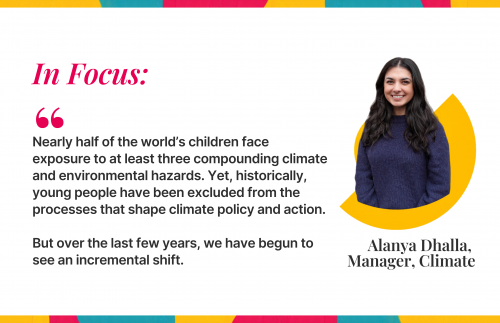
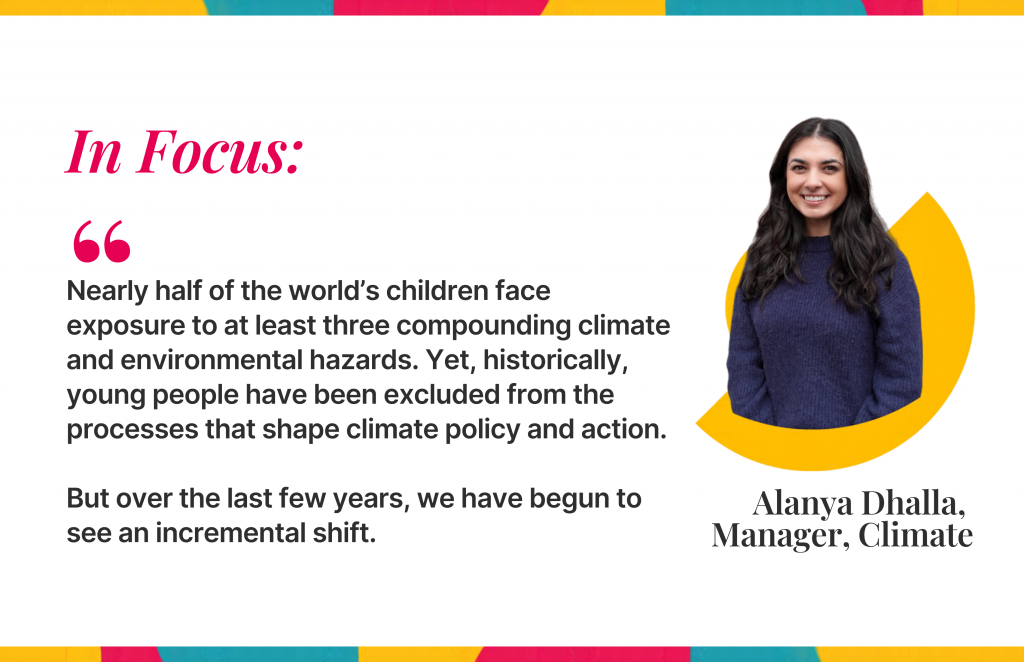
According to UNICEF’s 2026 Child Risk Report, nearly half of the world’s children – 1.1 billion – face exposure to at least three compounding climate and environmental hazards. From disrupted education, flooding, and extreme heat to growing climate anxiety and uncertainty about the future, children and young people are living the consequences of a changing climate now.
Historically, young people have been excluded from the processes that shape climate policy and action. But over the last few years, we have begun to see an incremental shift.
CIFF supports a growing ecosystem of youth-led and youth-focused initiatives that are helping shape the UNFCCC COP process – the annual conference where countries come together to negotiate global climate action.
Initiatives such as the Children and Youth Pavilion, the Youth Negotiators Academy and the Presidency Youth Climate Champion role help ensure that children and young people are not only recognised as being affected by climate change, but are also able to influence decisions about their futures. Together, these initiatives create pathways for young people to engage with climate processes, build leadership skills, and bring their perspectives directly into decision-making spaces.
What I find particularly powerful is that this work is not about creating a seat at the table for a single event or moment. It is about building the infrastructure that enables meaningful participation over time. Real inclusion requires more than invitations. It requires investment in leadership, networks, capacity and systems that recognise youth people not just as beneficiaries of climate action, but as leaders helping to shape it. As funders, our role is to ensure these opportunities are not left to chance but rather are built into the systems and institutions driving climate action. That means not only investing in young people but also breaking down the barriers that prevent them from participating, so that young people from diverse communities and backgrounds can help shape a more equitable and effective climate response.
To learn more about progress on fighting maternal and child malnutrition, read the full 2025 Annual Report: CIFF: Our Year in Review 2025