Girls’ education in India: setting girls for success


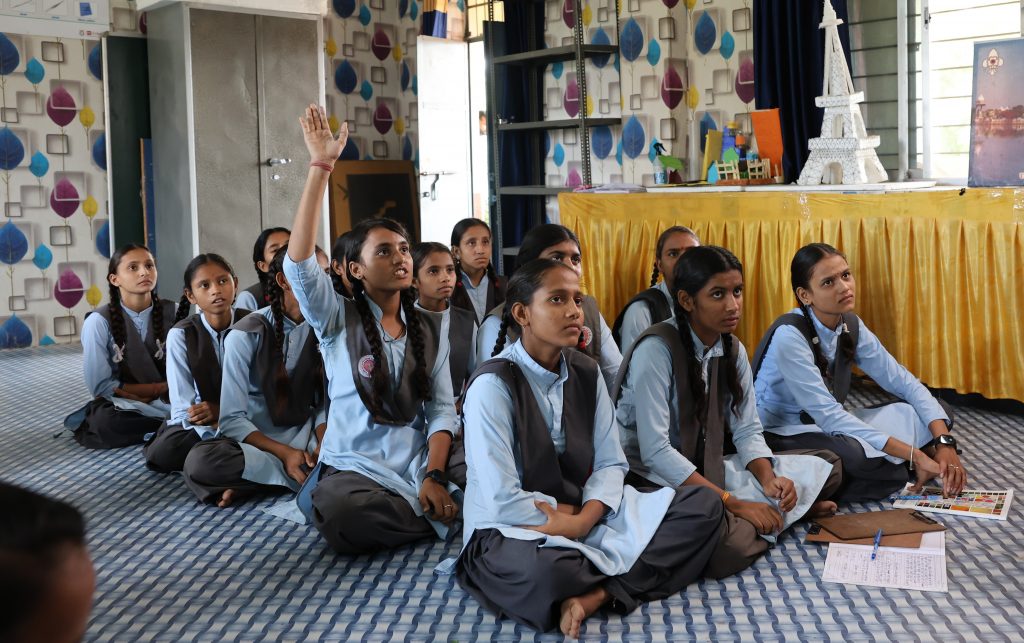
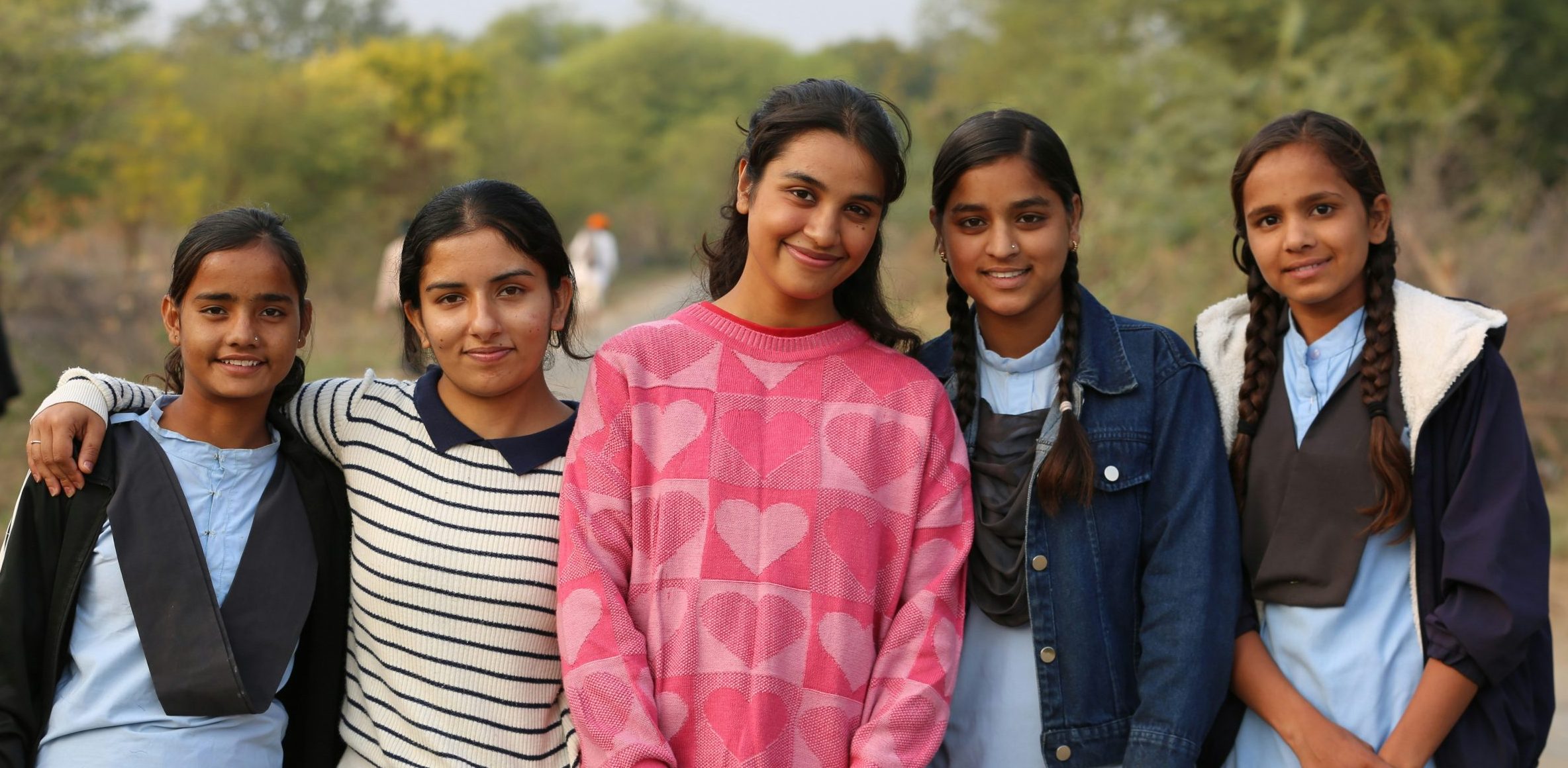
Over the past two decades, India has made remarkable progress in expanding girls’ access to education through its Right To Education Act and enabling government schemes and efforts, ensuring 90 percent girls enroll in primary schools. This achievement creates a strong platform for the next phase of progress: ensuring that girls remain in school through adolescence and complete their secondary education.
The factors influencing girls’ educational trajectories are complex and deeply interconnected, including economic constraints, poor learning outcomes, lack of relevant skills and income pathways, and restrictive social norms including the disproportionate burden of household responsibilities, distance, and safety concerns. Yet when girls are supported to stay in school longer, the returns extend far beyond education, contributing to better health outcomes, expanded economic opportunities, and greater agency for girls and women across generations.
The secondary school years therefore present a critical window for action – when many girls begin to fall behind and face the highest risk of dropping out. By creating enabling environments like scholarships or personalised learning support for academics, life and vocational skills, particularly in rural and high-burden contexts, more girls can stay engaged, build strong skills, and transition successfully into higher education or meaningful work.
CIFF’s Setting Girls for Success strategy,
responds to these challenges by placing girls’ education and agency at the heart of long‑term development. Grounded in evidence and shaped through local leadership, the strategy focuses on helping girls stay in school, ensuring they learn effectively and build skills to transition from education into meaningful work. Together, these elements strengthen girls’ ability to shape their own futures.
In India, this approach addresses both the systemic – access and retention in schools – and social barriers that cause girls to leave education early, while also strengthening the quality and relevance of education itself. This includes enabling access to financial, academic resources and necessary skills, improving learning outcomes, encouraging families to value girls’ education, and shifting the social norms that limit girls’ aspirations.
While India’s Right To Education Act makes education free and compulsory in primary/elementary grades, cost becomes an access barrier for girls in secondary education. CIFF supports government efforts through scholarships, a proven conditional cash transfer scheme, to ensure girls continue secondary school. Strengthening access to government scholarships by simplifying and digitising application processes, developing real‑time monitoring dashboards, and working with communities to build aspirations around girls’ education resulted in ~300,000 additional eligible girls receiving scholarships across four states to continue secondary education.
To address school retention challenges like poor learning, CIFF supported the government of Rajasthan to test and scale one of the country’s largest Personalised Adaptive Learning digital solutions through schools. The programme – Mission Buniyaad – reached ~500,000 girls across ~3,700 schools, with girls’ test scores improving by 20 percent and Board exam failure rates falling by four to six percent
The strategy also recognises the importance of life skills and vocational education as key levers for girls’ retention in secondary grades and making them future ready. Project Manzil, led by the government of Rajasthan, exemplifies this approach. By integrating career counselling, life skills, aspirational courses in vocational education, and employer connects for on-the-job-trainings, the programme increased uptake among schools and girls, leading to 70,000 girls completing vocational education, 16,000 girls completing on-the-job-trainings and five to six percent more girls completing school and transitioning to higher education and work with better salaries and benefits.
Over the next five years, CIFF plans to support governments to scale these programmes across six states in India. By enabling government‑led, scalable solutions in partnership with civil society, technology providers, and local communities, CIFF supports an education system that is more inclusive and adaptive to meet the needs of girls. Setting Girls for Success is rooted in a simple but powerful idea: when girls stay in school longer, acquire stronger skills, and access supportive environments, they gain greater agency over their futures.
Partners



Governments play a central role in shaping education systems, setting policy priorities, and delivering services at scale. CIFF in India will support government initiatives across Rajasthan, Jharkhand, Madhya Pradesh, Maharashtra, Bihar and Uttar Pradesh for these programmes.
Local and regional organisations bring deep contextual knowledge and trusted relationships with communities, schools and families. Key implementation partners include IPE Global, ConveGenius and ACF, whose on-the-ground presence and expertise are central to effective programme delivery and community engagement.
Mission Buniyaad reached ~500,000 girls across ~3,700 secondary schools between 2020 and 2025. The programme led to a 20 percent improvement in girls’ test scores and a four to six percent reduction in Board examination failure rates, directly improving learning continuity and retention during a critical transition phase in schooling.
Through Project Manzil, over 70,000 girls completed vocational education, with 16,000 girls completing on-the-job training between 2019-2025. Importantly, the programme enabled an additional five to six percent of girls to complete school and successfully transition to higher education and employment.
Across four states, approximately 300,000 additional eligible girls received scholarships to continue secondary education since 2022, with the programme currently ongoing. These scholarships played a critical role in reducing financial barriers, supporting school completion, and enabling girls, particularly from vulnerable households, to remain on an education-to-employment pathway.
When girls stay in school,
the benefits extend far beyond the classroom. Educated women have more freedom to make decisions around marriage and motherhood, have more opportunities to access the workforce, and have greater decision‑making power within their families and communities. These changes create more stable households, stronger communities, and improved outcomes for future generations.
By investing in girls’ education, CIFF’s Setting Girls for Success strategy helps to ensure that more girls in India are able to attend school, and to thrive within it. With these conditions met, education becomes more than a pathway out of poverty: it becomes a foundation for intergenerational change. Through this work CIFF is helping ensure that every girl has the chance to learn, lead and build a better future for herself and for the next generation.