Lenacapavir: promoting health, protecting communities, and building futures


Across sub-Saharan Africa, HIV continues to shape lives in profound and often invisible ways. Despite decades of progress, millions of people still live with the virus, and hundreds of thousands die each year from AIDS-related illnesses. For many communities, HIV is not a distant public health statistic, it is a daily reality that touches families, communities, and entire societies.
While antiretroviral treatment has transformed HIV into a manageable chronic condition for many, access remains uneven. Late diagnosis, treatment interruptions, stigma, and structural barriers mean that a substantial number of people still progress to advanced HIV disease, where weakened immune systems leave individuals vulnerable to life-threatening infections.
The consequences extend far beyond individual health. HIV places immense strain on families who must care for sick relatives, on health systems already under pressure, and on communities living with fear, stigma, and loss. Children and young people grow up in environments shaped by illness and uncertainty, where caregivers may be unwell, household incomes are fragile, and aspirations are constrained by survival. In such contexts, the full flourishing of children, their ability to learn, dream, and thrive, is too often compromised.
Ending HIV is not only a medical imperative. It is a social, economic, and moral one.
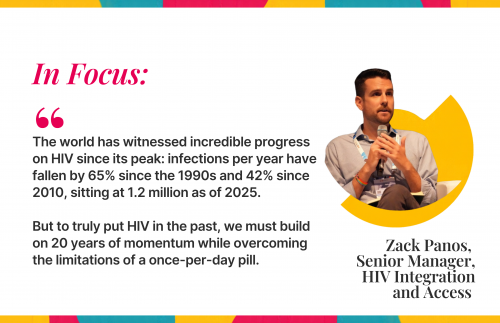
Lenacapavir represents a breakthrough in the global fight against HIV.
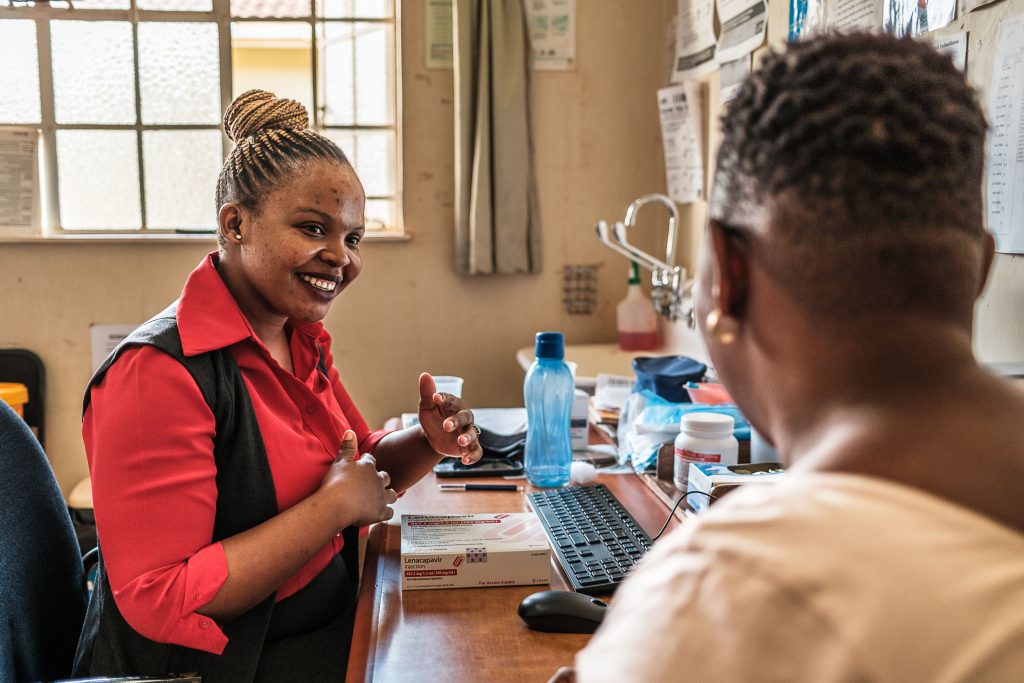
Developed in the private sector, this long-acting injectable HIV prevention option offers near-complete protection with just one injection every six months. For people at high risk of infection, lenacapavir has the potential to transform prevention from a daily and sometimes unreliable burden into a discreet, manageable, and empowering choice.
This innovation matters because adherence has long been one of the greatest challenges in HIV prevention. Daily oral pre-exposure prophylaxis (PrEP) requires consistent access, relying on conditions which are sometimes difficult to maintain in settings shaped by poverty, stigma or instability. Long-acting injectable prevention removes many of these barriers, reducing the need for frequent clinic visits, lowering the risk of missed doses and offering individuals greater autonomy over their health.
Beyond individual protection, lenacapavir carries system-wide benefits. With the right investment and conditions, the intervention has the potential to nearly eliminate new HIV infections in a country within ten years. By preventing new infections, it reduces long-term pressure on health systems, lowering future demand for lifelong treatment and care. Fewer new infections means fewer families disrupted, fewer children orphaned, and fewer communities living under the weight of preventable disease.
“At the Global Fund, we are incredibly excited by the promise of Lenacapavir and its potential to help us achieve a further significant reduction in new infections among individuals at high risk of acquiring HIV…As part of this coordinated effort, the Global Fund, PEPFAR, CIFF, and BMGF [the Gates Foundation] will work with Gilead and the voluntary licensing manufacturers to accelerate affordable and equitable access, so that more people can benefit from this powerful innovation from day one"

Executive Director of the Global Fund
Partners
Scientific breakthroughs alone do not change lives. Impact depends on scale, affordability and access, particularly in lower income countries where the need is greatest. Bringing lenacapavir to the communities most affected by HIV requires coordinated action across philanthropy, global health financing, and delivery systems.
Together with national governments, these partnerships enabled lenacapavir to progress from regulatory approval to first administration to a person with exceptional pace, enabling the intervention to reach those people who need it most, marking a step change in HIV prevention at scale.






National governments play a central role in determining how new prevention tools are adopted, regulated, and delivered. Countries such as South Africa have demonstrated leadership by integrating long-acting prevention options into national HIV strategies, aligning rollout with public health priorities and existing systems. Government ownership ensures that innovations like lenacapavir are deployed in ways that are sustainable, equitable, and responsive to local needs.
Civil society organisations are critical to building trust, addressing stigma, and ensuring that prevention reaches those most at risk. Community-led delivery helps translate new medical options into services that people can access confidently and safely, particularly for populations who have historically faced barriers to care.
Private sector partnerships play a crucial role in supporting rapid and affordable access to lenacapavir in low- and middle-income countries. Alongside licensing their technology to generic manufacturers, Gilead Sciences Ltd has an access partnership with philanthropic partners for start-up procurement of lenacapavir.
Cross-sectoral partners have also negotiated price agreements with the generic manufacturers to ensure that in the long-term, lenacapavir will be available at a price that governments can afford.
Philanthropic partners, including CIFF and the Bill & Melinda Gates Foundation, have played a catalytic role in bridging the gap between innovation and access. By providing early, risk-tolerant capital, philanthropy helped to unlock advance purchase agreements, accelerate regulatory and market-shaping efforts, and lay the groundwork for affordable pricing and future generic production.
The Global Fund played a critical role in channelling financing, coordinating procurement, and supporting country-led delivery. Its established infrastructure enabled rapid integration of new prevention tools into national HIV programmes, ensuring alignment with local priorities and health systems.
The Global Fund and the US government have committed to facilitating access to lenacapavir to 2 million users by 2027
More than 20 countries are expected to receive lenacapavir for administration by the end of 2026
Lenacapavir reached high-risk users in Africa less than six months after receiving US FDA approval, a record for a novel product with no existing generic manufacturers
For children,
the impact of Lenacapavir is both immediate and generational. Reduced prevalence of HIV means that children are much less likely to be born with HIV infection. Furthermore, when fewer members of a community fall ill, families are more stable. Caregivers are healthier, household incomes are more secure, and children are less likely to experience loss, disruption, or trauma associated with chronic illness and premature death.
Communities with lower HIV prevalence are safer, more resilient places for children to grow up. Children are freer to focus on learning, play, and exploration, the foundations of healthy development.